The Successful Junior Lawyer
Foundation Workshop Series
Give your juniors what they need
Clear direction.
That’s not just the obvious things, but also the implicit things. The things that everyone should know, but not everyone does. Juniors with lots of potential trip up simply because they don’t truly understand the reality they’re in.
We’ll help them.
This Workshop Series:
Makes the firm’s implicit expectations explicit
Juniors stop guessing what “good” looks like and start directing effort toward the behaviours and decisions that actually matter at your firm.
Shortens the time to trusted autonomy
Partners don’t just want better juniors; they need juniors they can trust sooner. Improve partner capacity and workflow efficiency.
Addresses non-technical causes of underperformance
Most issues are not about legal skill, but about prioritization, context, follow-through, and professional judgment. The program targets those directly.
Is immediately usable
Thanks to the practical and experiential nature of the workshops, participants leave with concrete heuristics, decision filters, and behavioural tools they can apply the next day.
Reduces avoidable anxiety and burnout
By removing guesswork, juniors gain clarity on expectations and feedback signals, which reduces second-guessing, overwork, and quiet disengagement.
Shared with:LOGO
logo
Logo
LOGO
Developed from industry leaders
This training came out of the Successful Junior Lawyer Project - a 1.5 year project designed to help junior lawyers succeed at their firm.
Almost 50 managing partners, chief people officers, department heads, talent directors, and regular partners were interviewed. From Am Law 10 firms to small boutiques, across Canada and the United States.
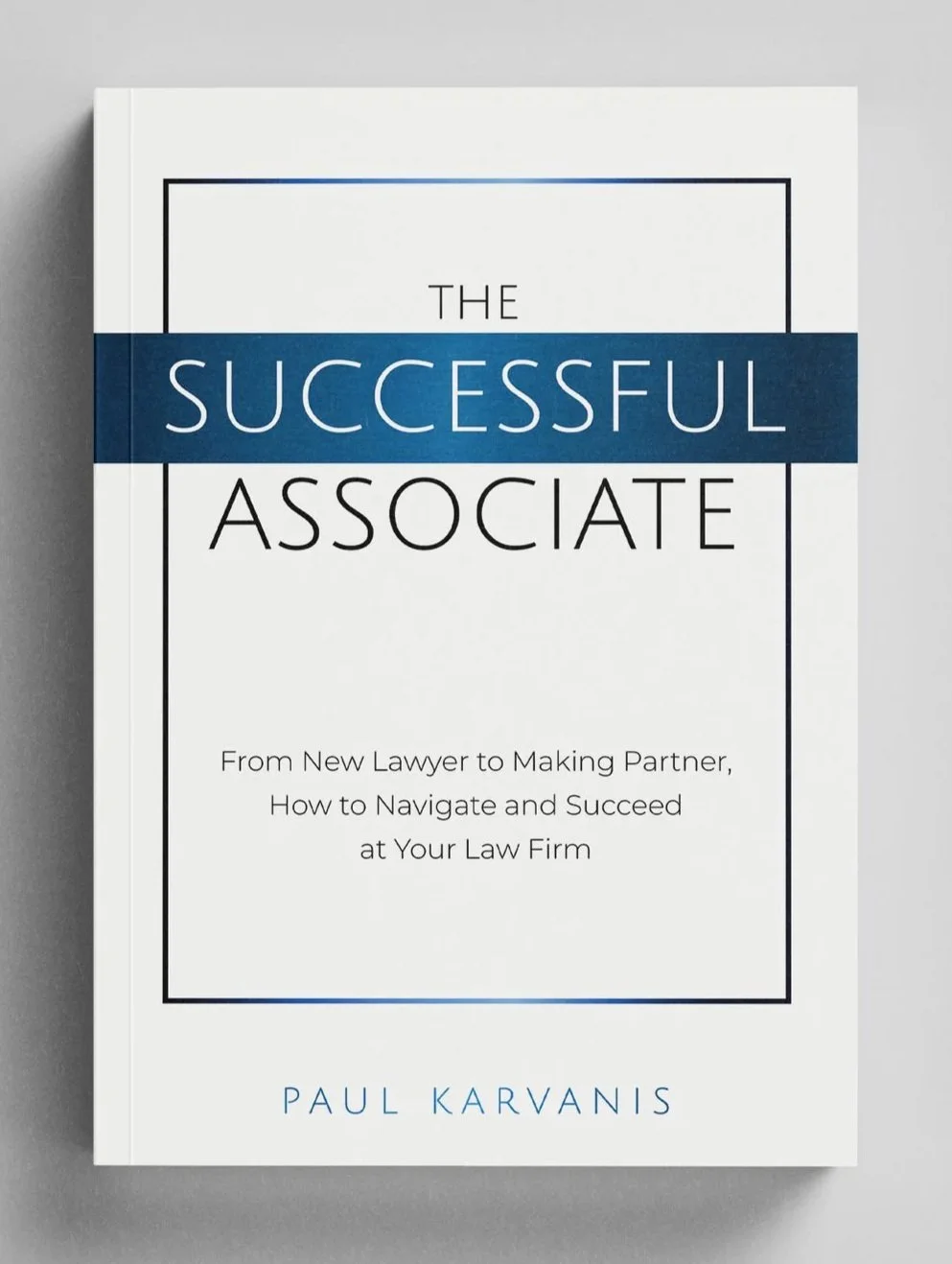
Their insights were collected, dissected, and distilled into a roadmap for associates who want to succeed (all in The Successful Associate book).
This training — the Successful Junior Lawyer Foundation Workshop Series — covers those insights most needed for juniors as they begin their practice.
Though every firm is different,
there are universal success factors.
Factors that apply across firms and practice areas.
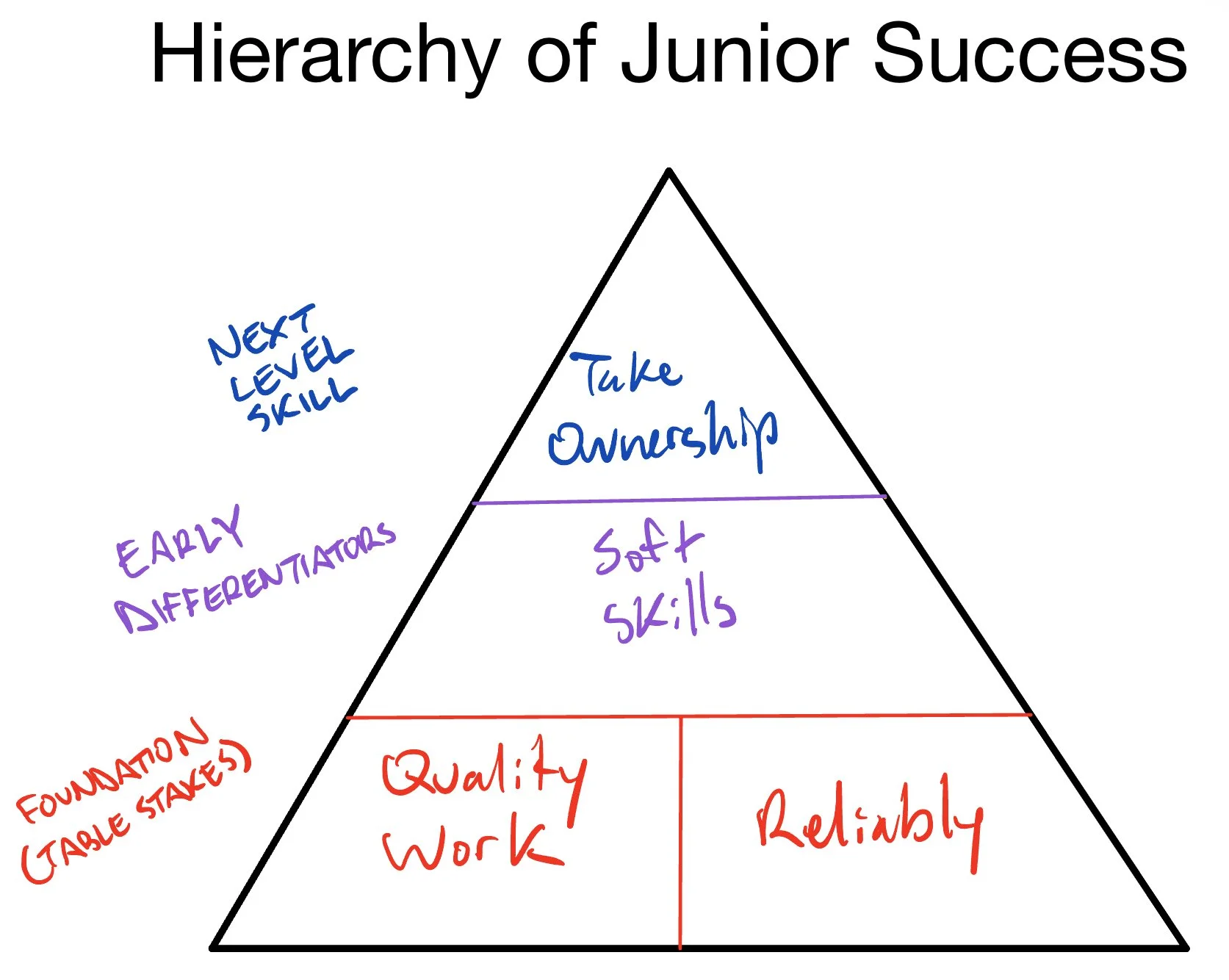
If you have an associate that can’t do quality work reliably, nothing else matters. You can’t have them helping you.
But doing quality work reliably is not a calling card, it’s a baseline requirement. What begins to separate some from the rest are the presence of people skills. The ability to meet people. Talk to people. Read a room so that they know when it’s time to offer their idea, or keep their mouth shout.
And even amongst those, there are juniors who stand out above the rest. Those who take responsibility and (appropriate) initiative. Who realize that their job isn’t just to take work off a partner’s plate, it’s to take it off their mind.
Our Process
Expectations are constantly rising. We expect more from a fifth year lawyer than a first. Far more important than how good your junior is at the start is how good they are at improving.
Improvement happens over time, which is why the training is a workshop series that takes place over three sessions with a month between. So that they can lock in the learning before coming back.
The seven key takeaways as sorted across the workshop series/book:
Workshop One:
Quality work and reliability are baseline requirements, not a calling card.
The Improvement Imperative
The Importance of Feedback (and difficulty in getting it)
Workshop Two:
The Importance of Your Reputation
The Expectation Effect
Workshop Three:
If you’re just doing what you’re asking to do, you’re doing it wrong.
Relationships are important, and they start now.
Covered in The Successful Associate Book but not the workshop series:
While law is sometimes a calling, it’s always a business.
And of course, since every firm is different, part of our process is talking with you to figure out how your firm’s preferences and approach to junior success and development. How you weight the various success factors. The training will then be tailored to your firm.
After all, our goal is to teach your juniors how to succeed at your firm.
Help your Juniors learn how to help themselves
Let’s see if there’s a fit for this training at your firm.